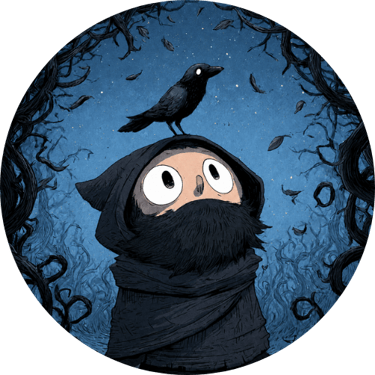
The Shop That Sold Used Tomorrows
Mara Vale finds a little shop that sells used tomorrows at a discount. The problem is that every tomorrow comes with the regrets of whoever owned it first.
WHIMSICAL RUINS
5/22/20264 min read
Mara Vale found the shop on a Thursday, which felt personal.
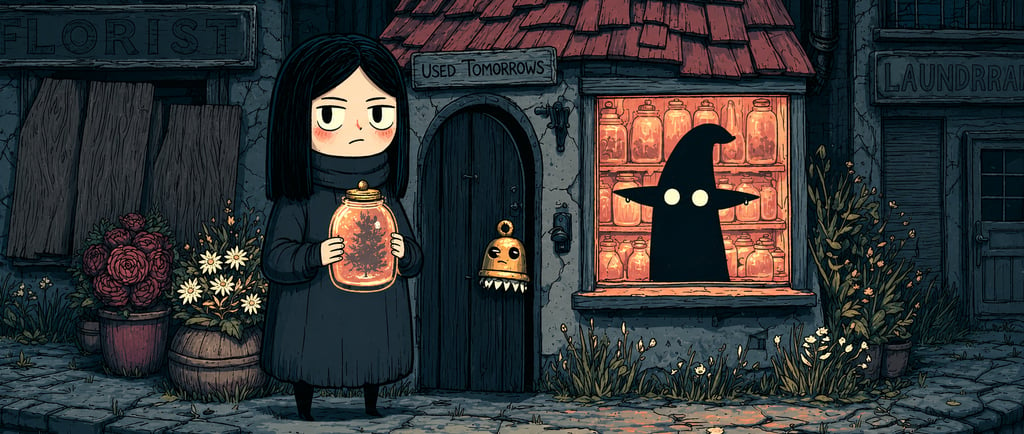
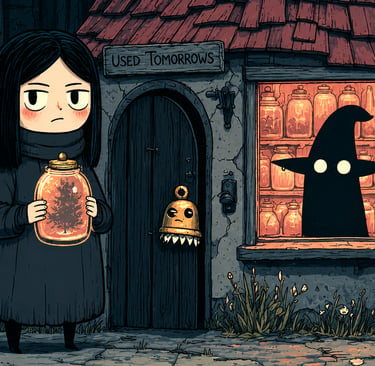
It stood between a dead florist and a laundromat that had been “temporarily closed” for three years. The door was narrow and black. A brass bell shaped like a tooth hung above it. The sign read:
USED TOMORROWS
Lightly Damaged. No Refunds.
Mara stared at it while holding two overdue bills, one resignation letter she lacked the courage to send, and a coffee that tasted like hot pennies.
“Well,” she muttered, “that seems healthy.”
Inside, the shop smelled of dust, roses, and something left too long in a drawer. Shelves covered every wall. Glass jars sat in uneven rows, each one holding a tiny weather system: gray mornings, yellow afternoons, bruised sunsets, nights glowing with television-blue regret.
Behind the counter stood a goblin in a burgundy waistcoat. He had spectacles, thin fingers, and the exhausted expression of someone who had spent centuries watching humans make predictable choices and still somehow be surprised.
“Welcome,” he said. “Browse carefully. Touch nothing unless you are prepared to be emotionally inconvenienced.”
Mara picked up a jar labeled:
Wednesday. No one needs you. Slight guilt included.
“How much?” she asked.
The goblin looked her over. “Depends what you’re avoiding.”
“I’m not avoiding anything.”
He blinked very slowly.
Mara sighed. “Fine. Everything.”
That was not completely unfair. Her mother had died six months ago. Her job had turned into a swamp with fluorescent lighting. Her boyfriend, Elias, had left after saying, “You never let anyone help you,” which Mara felt was rude, mainly because it was accurate.
The goblin slid a silver dish across the counter.
“One honest memory.”
“That sounds dramatic.”
“It is a magical retail experience, madam. Drama is included.”
Mara placed her hand on the dish.
She remembered her mother’s kitchen after the funeral. Casseroles on the counter. People whispering like grief was a sleeping animal. Elias touching her shoulder. Mara snapping, “Don’t,” so sharply his face closed.
The dish warmed.
The goblin sniffed. “Excellent guilt. Slightly bitter. Good structure.”
“That was private.”
“So are most valuables.”
He wrapped the jar in black paper and handed it to her.
“Open at dawn. Do not use while drunk, grieving, or making major decisions after midnight.”
“That feels specific.”
“Humans are specific disasters.”
The next morning, Mara opened the jar in the courtyard behind her apartment building.
Silver mist spilled out.
The world softened.
Suddenly it was Wednesday, but not hers. The sky was gentle. Her phone had no messages. Her calendar was empty. No bills, no emails, no needy coworkers asking where the forms lived, as if forms were shy woodland creatures.
For the first time in months, nobody required her.
She walked through the city. She ate a pear tart at a café where the waiter had antlers and an attitude problem. She watched black birds bathe in a fountain full of coins and tiny bones. She bought gloves from a woman who claimed they had belonged to either a saint or a dentist.
It was almost peaceful.
Then the day began to stain.
A shadow appeared under a bench. A sob slipped from behind a locked door. A cracked reflection moved differently than Mara did.
The used tomorrow was remembering its first owner.
Mara saw a woman named Ida in flashes. Ida in a hospital hallway, drinking vending machine coffee with murder in her eyes. Ida in her car, unable to go home yet. Ida hiding in a bathroom while three people knocked and asked where things were.
This tomorrow had belonged to someone else who had wanted one day without being needed.
Of course, Mara thought. Even peace was secondhand bullshit.
Then a door appeared in the street.
White paint. Brass knob. A scratch near the frame.
Her mother’s kitchen door.
“Oh, hell no,” Mara said.
The door opened anyway.
Inside was the kitchen after the funeral. The casseroles. The lilies. The terrible coffee. Mara stood at the sink, scrubbing a clean plate because crying felt too public.
Her mother sat at the table in her green cardigan, not alive, not dead, but memory-shaped.
“You bought a day off?” her mother asked.
“I bought a day where nobody needed me.”
“That is not the same thing.”
Mara gripped the sink. “You left me with everything.”
There it was. The ugly truth. Not polished. Not noble. Just bitter and small and real.
Her mother looked at her softly.
“I know.”
“I’m angry at you.”
“I know.”
“I miss you.”
“I know that too.”
Mara laughed once, and it cracked in the middle. “You’re very calm for a dead woman.”
“My schedule is clear.”
On the counter, her mother lifted the foil from a casserole.
“Who brought tuna with raisins?”
“Mrs. Pell.”
“I always knew that woman had darkness in her.”
Mara laughed properly then, which was rude because she was also crying. Her face did both at once, badly.
“I pushed Elias away,” she said.
“Yes.”
“I pushed everyone away.”
“Yes.”
“I thought if no one helped me, no one would see how badly I was falling apart.”
Her mother nodded. “That sounds like your kind of bullshit.”
The kitchen began to fade. The walls turned silver at the edges.
“You can keep buying used tomorrows,” her mother said. “People find all kinds of ways to skip their lives. Work. Wine. Bad relationships. Expensive candles called things like Forest Wound.”
“I own that candle.”
“It smells like a damp priest.”
Mara wiped her face.
Her mother touched her cheek, warm as dust.
“Go live one of your own days,” she said. “Badly, if needed. Most people do.”
The kitchen vanished.
Mara woke in the courtyard beside the empty jar. It was still dawn. A pigeon watched her like it owned property.
Her phone buzzed.
A message from Elias:
I found your blue scarf. Do you want it back?
Mara stared at it for a long moment.
Then she typed:
Yes. Also, I’m sorry. Also, I am not okay. Also, I hate that you were right, so please don’t enjoy that part too much.
She nearly deleted it.
She sent it.
A minute later:
I won’t enjoy it out loud. Coffee?
Mara sat on the pavement with mascara on her chin and a cursed jar beside her.
Tomorrow did not feel fixed.
It felt inconvenient.
Possibly survivable.
Later, she went back to the shop. The black door was gone. In its place stood a vending machine full of tiny jars.
A note on the glass read:
TODAY’S SPECIAL:
ONE ORDINARY TOMORROW
FULL PRICE. NO WARRANTY.
Inside the jar was a plain morning. Dishes. Bills. Rain. One difficult conversation.
Mara put in her coins.
The machine groaned and dropped the jar.
She picked it up.
“Expensive asshole,” she said.
Then she carried her own tomorrow home.
Follow Calleo
Follow strange little stories, cursed creatures, gothic art, tiny nightmares, and dark whimsical fantasy across social media.
Contact
Want new stories before they crawl out into the dark? Join for dark whimsical fantasy, monster hearts, cursed objects, gothic tales, and strange little worlds.
hello@imcalleo.com
© Calleo — Strange Little Stories